


Colorado Window Construction Defect Attorneys.
At Hearn & Fleener, we specialize in uncovering systemic window defects including failed sill pans, improper flashing, missing sealants, and defective installation practices that allow moisture to penetrate your building's structure. By combining forensic expertise with a rigorous analysis of building documents, we develop the clear technical evidence needed to hold developers accountable for substandard work and restore your property's integrity. Every step of our investigation is performed at no cost to your association or property.

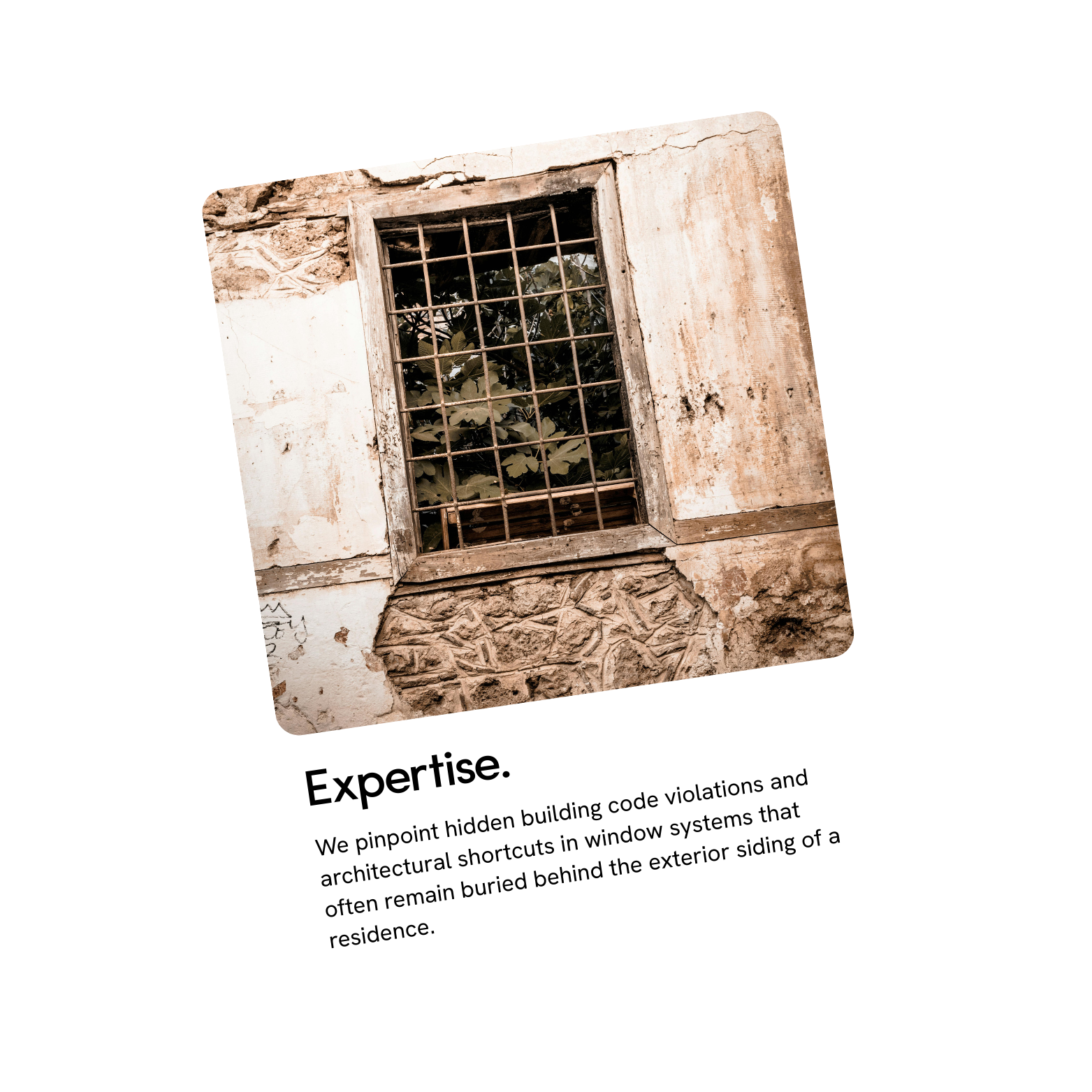
Window failures hide behind walls and beneath finishes. We find them, document them, and force builders to pay for them.

In Colorado, window construction defects are among the most destructive and most commonly overlooked failures in residential and commercial construction. The state's dramatic freeze-thaw cycles, intense UV exposure, heavy snow loads pressing against window frames, and expansive soil movement that shifts building structures all combine to expose every weakness in a defectively installed window system within just a few seasons of construction.

Why Colorado's Climate Makes Window Defects Worse.
A window defect that causes minor inconvenience in a mild climate becomes a serious and expensive structural problem in Colorado.
Here is what defectively installed windows are up against.


Freeze-Thaw.
Sealants fail faster in Colorado's temperature swings.
Soil Movement.
Expansive soils shift frames and break seals across the Front Range.
Snow & Ice.
Snowmelt finds every gap in a defective installation.
Wind.
High winds force water through every imperfect joint.
UV Exposure.
High altitude UV degrades sealants ahead of schedule.
Hail.
Hail impacts stress frames and reveal pre-existing defects.
How Hearn & Fleener Investigates Window Defects.
Window defect claims are routinely disputed by builders who attribute leaks to sealant maintenance, normal wear, or storm events rather than faulty installation. Proving a window construction defect requires technical documentation that directly links the water intrusion to a specific installation failure. Here is exactly how we build that case.
-
Our team conducts a hands-on forensic inspection of your window systems using non-destructive methods including controlled water testing, infrared thermal imaging, and physical investigation of flashing and sealant conditions. Water testing applies controlled water to specific areas of the window installation to identify exactly where water enters the building assembly, creating a precise and legally defensible record of every leak source across the property.
-
Window defects rarely exist in isolation. They are almost always part of a broader building envelope failure that includes defective flashing, missing weather barriers, and improperly integrated exterior cladding systems. Our forensic team investigates the full building envelope around and above each affected window, using selective probing and moisture testing to document the extent of damage within wall assemblies that may not be visible from the interior or exterior.
-
We pull the original building permits, approved architectural plans, window manufacturer installation specifications, and any building envelope specifications called out in the project documents. This research establishes exactly what standard your window installation was supposed to meet and identifies every party responsible for the installation so that no contractor or subcontractor escapes accountability. We also request manufacturer installation instructions to determine whether the installer followed the required procedures.
-
Builders routinely attempt to attribute window leaks to storm events, hail damage, or deferred maintenance to avoid liability. Our forensic investigation is specifically designed to establish that water intrusion results from a pre-existing installation defect rather than an external event. We document the installation failures that existed from the date of construction and demonstrate through controlled testing and specification analysis that those failures, not weather conditions, are the proximate cause of the water damage your property has sustained.
-
Our complete findings, the water testing results, building envelope investigation, specification analysis, and defect documentation are compiled into a written report and presented in person to your Board of Directors and management company. Your board receives a complete picture of the window defects identified, the responsible parties, the projected repair scope and cost, and the realistic financial outcome of pursuing a claim. All of this is provided at no cost and with no obligation before your board makes any decision.
Common Window Defects.
Window Deficiencies.
Window defects are rarely the result of normal wear and tear. They are almost always caused by systemic installation errors and the failure to properly integrate window units into the building envelope during the construction phase. If your community or property is experiencing any of the following defect types, you may have a valid Colorado construction defect claim.
Defect Types.
1
Flashing
2
Leaks
3
Installation
4
Sealant
Improper Flashing.

Most leaks occur because the waterproof paper and metal flashing were not integrated correctly to create a protective shower curtain effect around the window frame.Most window leaks occur because the waterproof paper and metal flashing were not correctly integrated around the window frame to create a continuous protective barrier. When flashing layers are incorrectly lapped, installed in the wrong sequence, or omitted entirely, water finds its way into the wall assembly every time rain or snowmelt contacts the window perimeter.
Sealants.
Builders frequently fail to apply the necessary sealants between the window and the building envelope which allows moisture to enter as materials swell and shrink with temperature changes.Builders frequently fail to apply the required sealants between the window unit and the surrounding building envelope materials. In Colorado, where temperature swings cause different building materials to expand and contract at different rates, missing sealants create gaps that open and close with the seasons allowing progressive water infiltration that causes hidden rot and mold behind finished wall surfaces.
Installation.
Unique or oversized custom windows often require specialized custom flashings that installers fail to execute properly, particularly at the seams over mullions.Oversized or custom window units require specialized custom flashings that many installers lack the experience to fabricate and install correctly, particularly at the seams over mullions. When a contractor installs a custom window system without the required custom flashing components, the result is a systemic leak source at every mullion seam across the entire window wall.
Defective.
In some cases the window unit itself is defective from the manufacturer, meaning it will leak regardless of how well the contractor installs it. Identifying a manufacturer defect versus an installation defect requires forensic expertise and in some cases product testing, but both are recoverable construction defects under Colorado law. Hearn & Fleener's investigation process is designed to identify the source of the failure with precision so that every responsible party is held accountable.
Thresholds.
For sliding glass or French doors, leaks often occur at the threshold because this area is notoriously difficult to flash correctly.For sliding glass doors and French doors, leaks most frequently occur at the threshold because this area is technically among the most difficult to flash correctly. Improper threshold flashing or the absence of a correctly sloped pan flashing beneath the door unit allows water to enter the building at floor level, where it causes progressive damage to subfloor systems, framing, and interior finishes.
Weather Barriers.
The horizontal metal flashing installed at the top of a window — known as head flashing — is designed to divert water away from the window opening and direct it to the exterior face of the building. When builders omit this component or fail to tuck it correctly behind the weather barrier above, water flows directly into the wall cavity every time precipitation contacts the window head. Head flashing failures are among the most frequently documented window defects in Colorado construction defect claims.
Frequently Asked Questions.
1
Cost
2
Time
3
Effort
4
Liability
-
Custom windows require the same flashing and integration standards as any other window but they come with the added challenge of requiring custom-fabricated flashings that most installers lack the experience to produce and install correctly. Be sure your window installer is manufacturer-certified and capable of fabricating custom flashings without seams over the mullions.
Sealant with backer rod must be applied between the window unit and all surrounding building envelope materials to allow the window and envelope to expand and contract at different rates as Colorado's temperatures change. If your custom windows are leaking or showing signs of water intrusion, contact Hearn & Fleener for a free forensic evaluation before the damage compounds further.
-
Window leaks are not always immediately apparent. In some cases significant water is entering the building with no obvious interior source, because the water is traveling through wall assemblies before appearing as staining or dampness. Look for dampness around and beneath window sills, staining on interior walls or ceilings near window perimeters, and bubbling or peeling paint near window frames. On the exterior, check whether flashings and sealants are present, intact, and in good condition. Missing or deteriorated flashings and sealants are a strong indicator that water is entering the building assembly even before visible interior damage appears. If you suspect window leaks, contact us for a free forensic inspection.
-
Sticking and binding windows in Colorado are frequently a symptom of deeper structural issues rather than a problem with the window units themselves. Colorado's expansive bentonite clay soils cause building structures to shift and settle in ways that rack window frames out of their original alignment, making operation difficult or impossible. Structural framing deficiencies can produce the same effect.
Both expansive soil movement caused by a builder's failure to properly engineer the foundation and structural framing deficiencies caused by poor workmanship are recoverable construction defects under Colorado law. If your windows are sticking in a relatively new building, contact Hearn & Fleener for a free evaluation before attributing the problem to the windows themselves.
-
Yes. Because windows are typically located adjacent to insulation and wood framing, even a small leak can create a persistently damp environment that encourages mold growth and structural rot behind your drywall. In Colorado's climate, where temperature swings create repeated cycles of condensation and drying, even intermittent moisture infiltration through a defective window installation can cause progressive mold contamination that spreads through wall cavities well beyond the immediate area of the leak. Mold remediation costs are recoverable as part of a window construction defect claim when the mold results from a builder's installation failures.
-
Condensation between the panes of a double-pane window indicates a seal failure, the inert gas or dry air between the panes has been replaced by moist exterior air. While seal failure can occur over time in older windows, premature seal failure in newer windows is a strong indicator of a construction defect. Window frames that were twisted or stressed during installation place uneven load on the glazing seals and cause them to fail well ahead of their expected service life.
Manufacturer defects in the sealed unit itself can produce the same result. Both installation-induced seal failure and manufacturer defects are potentially recoverable under Colorado construction defect law. If multiple windows in a relatively new building are experiencing premature seal failure, contact Hearn & Fleener for a free forensic evaluation.

Window defects are among the most commonly misattributed and under-pursued construction defect claims in Colorado. Do not let a builder convince your community that leaking windows are a maintenance issue or a weather event.
Contact Hearn & Fleener today for a free confidential forensic inspection and written report. No upfront costs, no obligation, and no risk. You only pay us when you recover.