


Colorado Deck & Balcony Construction Defect Attorneys.
At Hearn & Fleener, we treat deck and balcony construction defect claims with particular urgency because the stakes are uniquely high. A failed guardrail or a structurally compromised deck does not just threaten your community's finances. It threatens the safety of every resident and visitor who uses it. We identify failures in waterproofing, structural connections, and code compliance, and we build the legal and technical case that forces builders to pay for the repairs that should have been done correctly from the start. Every step of our investigation is performed at no cost to your association or property.
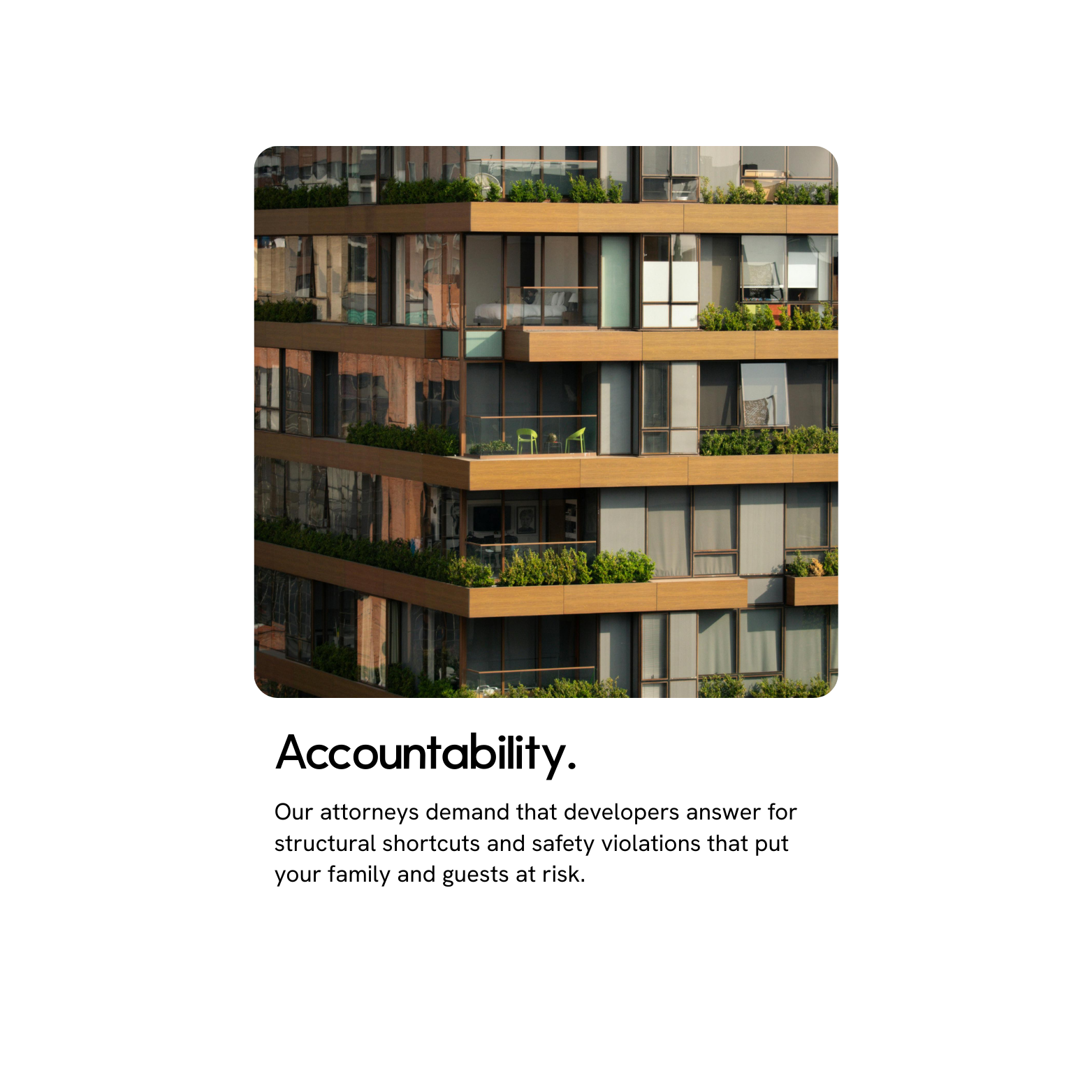
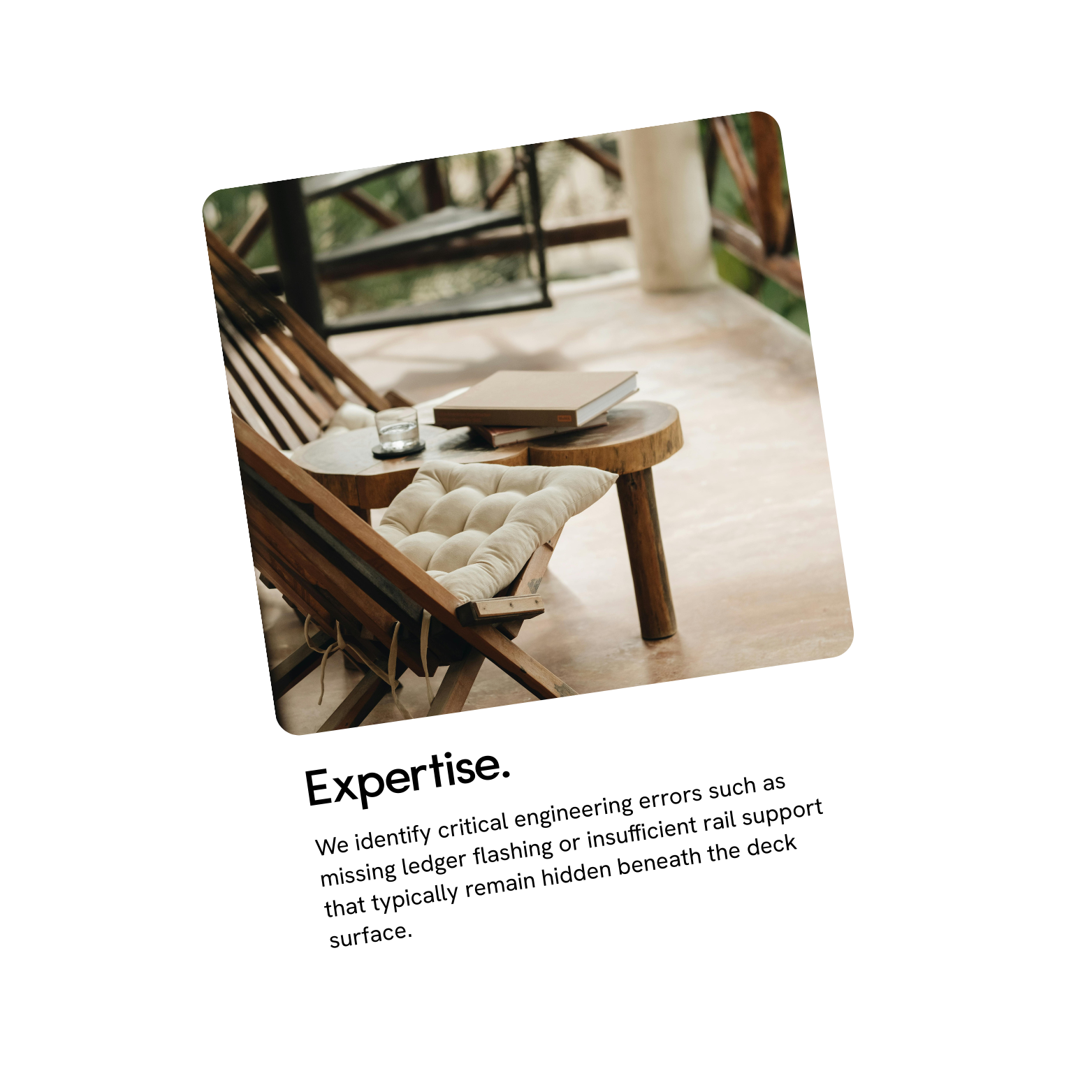
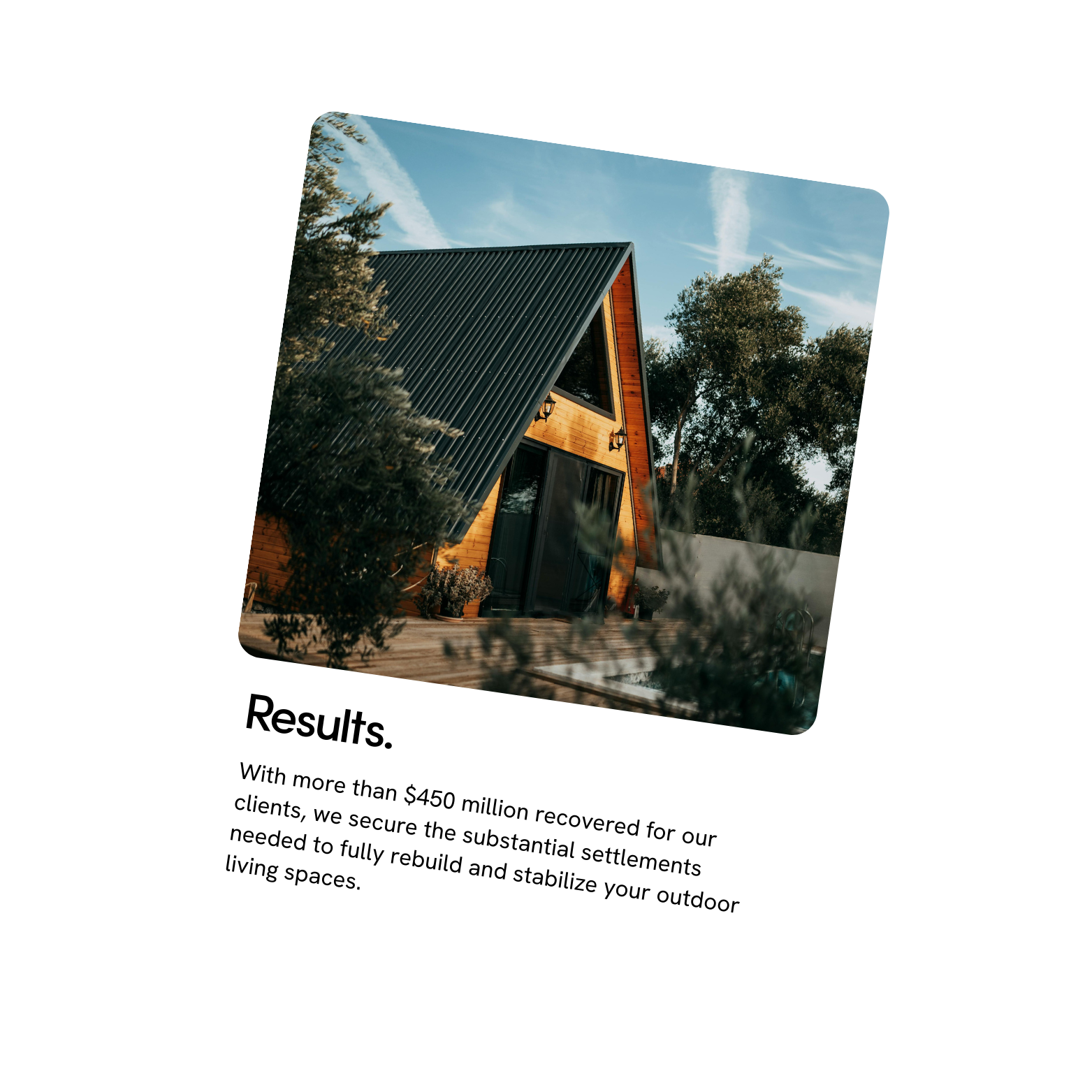

Deck & balcony defects are not just a maintenance problem. They are a life-safety risk. We identify the failures and hold builders accountable before someone gets hurt.
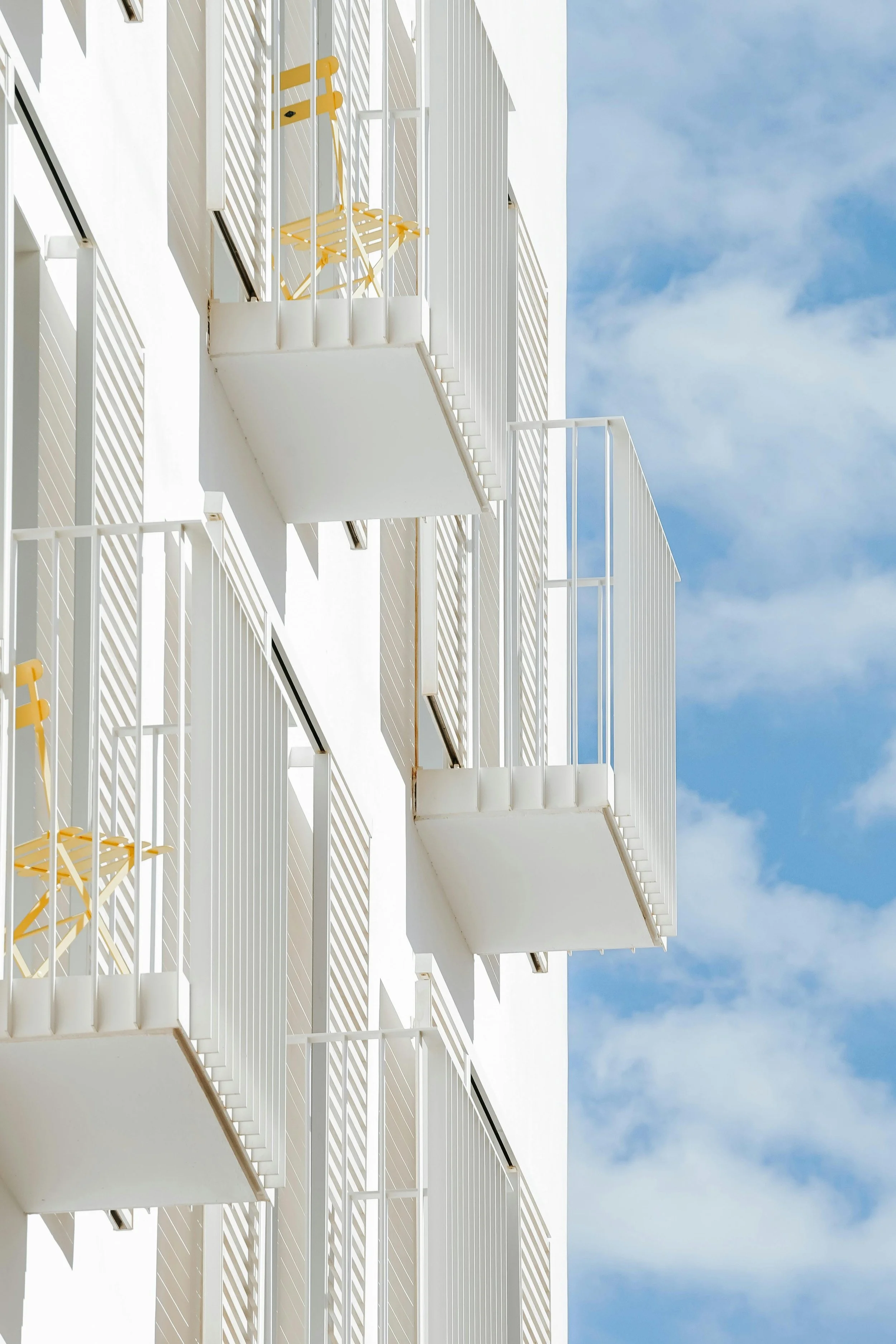
Decks and balconies are among the highest-risk structural components in any residential or commercial building. They must be engineered to withstand Colorado's heavy snow loads, dramatic freeze-thaw cycles, and the constant moisture exposure that comes with the state's climate. When a builder fails to properly flash, waterproof, or structurally connect a deck or balcony, the consequences range from hidden rot and interior water damage to structural failure and collapse.

Why Colorado's Climate Makes Deck & Balcony Defects Worse.
A deck or balcony defect that causes slow deterioration in a mild climate can become a catastrophic structural failure in Colorado within just a few seasons.
Here is why.



Snow Loads.
Heavy snow exposes every structural weakness.
Soil Movement.
Expansive soils cause footing settlement and structural shifting.
Freeze-Thaw.
Repeated freezing accelerates rot and concrete deterioration.
Moisture Trapping.
Colorado's dry-wet cycles create a hidden greenhouse effect.
UV Exposure.
High altitude UV degrades waterproof coatings rapidly.
Frost Line.
Footings installed above Colorado's frost line fail predictably.
How Hearn & Fleener Investigates Deck & Balcony Defects.
Deck and balcony defect claims are frequently disputed by builders who attribute failures to weather damage, deferred maintenance, or normal material aging. Establishing that a structural or waterproofing failure resulted from a builder's code violation or installation error requires forensic documentation that most property owners and HOA boards cannot produce on their own.
Here is exactly how we build that case.
-
Our team conducts a comprehensive structural inspection of every affected deck and balcony, examining framing connections, ledger attachments, beam-to-post connections, joist hanger installation, guardrail hold-down hardware, footing depth, and drainage slope. We document every structural deficiency photographically and in written form, creating a legally defensible record of every code violation and installation failure across the property.
-
Waterproofing failures in deck and balcony systems cause damage that is almost entirely hidden from view. We use moisture meters, infrared thermal imaging, and selective probing to document the full extent of moisture intrusion within framing members, sheathing, and wall assemblies adjacent to and beneath affected deck surfaces. This investigation frequently reveals damage that extends far beyond what is visible from the surface.
-
We pull the original building permits, approved structural plans, and applicable building code requirements for your jurisdiction. For deck and balcony systems, code compliance analysis is particularly critical because it establishes exactly which connections, hardware specifications, waterproofing requirements, and footing depths were required by law at the time of construction. Every code violation we identify becomes a documented basis for legal liability against the builder.
-
Deck and balcony defects that present an immediate collapse or fall risk require a different response than defects that cause progressive water damage. As part of our inspection process we assess every defect for its life-safety implications and provide your board with a clear triage recommendation — identifying which defects require immediate remediation, which can be managed in the short term while the legal claim proceeds, and which can be addressed as part of the full repair program funded by the recovery.
-
Our complete findings, the structural inspection, moisture investigation, code compliance analysis, and life-safety triage, are compiled into a written report and presented in person to your Board of Directors and management company. Your board receives a complete picture of every defect identified, the responsible parties, the projected repair scope and cost, and the realistic financial outcome of pursuing a claim. All of this is provided at no cost and with no obligation before your board makes any decision.
Common Deck & Balcony Defects.
Deck & Balcony Deficiencies.
Deck and balcony defects are almost never the result of normal aging. They are almost always caused by systemic construction errors that compromise the structure from the day it was built. If your community or property is experiencing any of the following defect types, you may have a valid Colorado construction defect claim.
Defect Types.
1
Railings
2
Slope
3
Supports
4
Fasteners
Flashing.

The ledger board is the structural member that attaches the deck directly to the house. When builders fail to install continuous metal flashing at this connection, water infiltrates the joint between the deck and the building, rotting the structural rim joist of the home from the inside. Ledger board flashing failures are the most common source of deck-related interior structural damage in Colorado residential construction and are frequently not discovered until the rot has spread across a significant section of the home's framing.
Waterproofing.
On walk-deck balconies built over living spaces, the waterproof membrane installed on the deck surface is the only barrier preventing water from entering the occupied space below. When builders use inadequate membrane systems, fail to properly seal transitions at door thresholds, or skip the membrane entirely, water infiltrates the floor assembly and causes progressive rot, mold, and structural damage to the ceiling of the space below. These failures are typically not discovered until water staining or peeling paint on the ceiling beneath the deck reveals the extent of the damage.
Guardrails.
Builders often fail to use the required structural "hold-down" brackets for railing posts, resulting in guardrails that feel sturdy but cannot withstand the weight of a person leaning against them.Building codes require guardrail posts to be secured with structural hold-down brackets that can withstand the lateral load of a person falling against the railing. When builders attach guardrail posts with inadequate fasteners or omit the required hold-down hardware entirely, the guardrails may feel sturdy under normal use but are incapable of withstanding a real fall event. This is one of the most serious life-safety defects in residential construction because the failure mode is a collapsing guardrail at exactly the moment it is most needed.
Fastening.
Using the wrong nails or omitting joist hangers entirely can cause a deck to slowly pull away from the house, creating a significant collapse hazard.Using incorrect nails, undersized fasteners, or omitting joist hangers entirely causes the deck frame to progressively loosen and pull away from the house over time. In Colorado's climate, where freeze-thaw cycles and moisture repeatedly stress every connection in the framing, inadequate fastening accelerates this separation. A deck that is visibly pulling away from the house is a structural collapse hazard, and the builder's failure to use the required hardware is a fully recoverable construction defect.
Connections.
The main support beams of a deck must be physically notched into the posts or secured with heavy-duty structural connectors. Simply bolting a beam to the side of a post is a common defect that relies entirely on the strength of a few bolts to hold up the entire deck.The main support beams of a deck must be physically notched into the posts or secured with heavy-duty structural connectors rated for the full load of the deck. When builders simply bolt a beam to the side of a post rather than using the required notched or connector-secured connection, the entire weight of the deck is carried by a few bolts in shear rather than by a proper bearing connection. This failure mode is invisible from above but can cause catastrophic collapse without warning, particularly when the deck is loaded with snow or people.
Drainage.
If a balcony is not sloped away from the building, water will pool against the siding and eventually find a pathway into the home’s framing.Building codes require deck and balcony surfaces to slope away from the building at a minimum grade to direct water toward drains or off the edge rather than pooling against the siding. When builders construct flat or reverse-sloping deck surfaces, water pools against the building's exterior cladding and infiltrates the wall assembly at the base of the deck, causing progressive rot in the siding, sheathing, and framing behind it. In Colorado's climate this pooled water freezes and thaws repeatedly, accelerating the damage every winter.
Frequently Asked Questions.
1
Cost
2
Time
3
Effort
4
Liability
-
Yes. This is one of the most common misconceptions we encounter from Colorado property owners.
Even in Colorado's dry climate, surfaces that allow water or snowmelt to pool rather than drain properly create persistently damp environments. Colorado's dramatic temperature swings cause trapped moisture to cycle through repeated heating and cooling, creating a greenhouse effect around wood framing that encourages mold growth and accelerates structural rot. Any deficiency in the waterproofing layer allows this cycle to repeat with every precipitation event throughout the year.
The same freeze-thaw dynamics are equally destructive to concrete balconies. As water penetrates a concrete deck surface, Colorado's cycles cause progressive concrete spalling and rust formation on any embedded steel posts, tension cables, or fasteners, damage that is invisible from above until structural components have already sustained significant corrosion.
-
The most serious warning signs require immediate action. Look for wobbly or loose guardrails, boards that feel soft or spongy underfoot, any visible gap between the deck frame and the house, rot or discoloration at the base of guardrail posts, concrete that is flaking or spalling, and rust staining from embedded hardware. Any of these signs in a relatively new building strongly indicates a construction defect rather than normal aging. Contact Hearn & Fleener for a free forensic evaluation before the structural condition deteriorates further.
-
Yes. Most deck-related interior damage occurs at the ledger board where the deck attaches to the house. When this area is not properly flashed, water infiltrates the joint and rots the wooden rim joist from the inside. The result can include sagging floors, drywall cracks in adjacent rooms, and in severe cases, structural failure at the building's perimeter. By the time interior symptoms appear, the rot has typically been progressing for years beyond what is visible.
-
Peeling paint or water staining on the ceiling beneath a balcony is one of the clearest indicators that the waterproof membrane on the deck surface above has failed or was never correctly installed. By the time peeling paint or staining becomes visible from below, the deck framing and ceiling structure have typically already sustained significant moisture damage. This is a recoverable construction defect when the membrane failure results from a builder's improper installation.
-
Freestanding decks eliminate the risk of water intrusion at the ledger connection but are still fully subject to construction defect issues. In Colorado, footings must be installed below the local frost line to prevent seasonal heaving. Builders who install footings at inadequate depth create a structure that heaves every winter and settles every spring, progressively loosening framing connections and creating a structural collapse risk. A builder's failure to meet Colorado's frost line requirements is a recoverable construction defect.
Contact us today to set up your no cost evaluation and report to help your community move forward.Unlike most construction defects that primarily cause financial damage, deck and balcony failures present genuine life-safety risks that compound with every Colorado winter.
Colorado's construction defect filing deadlines are strict, and delay not only narrows your legal options but allows structural deterioration to continue.
Contact Hearn & Fleener today for a free confidential forensic inspection and written report. No upfront costs, no obligation, and no risk. You only pay us when you recover.